
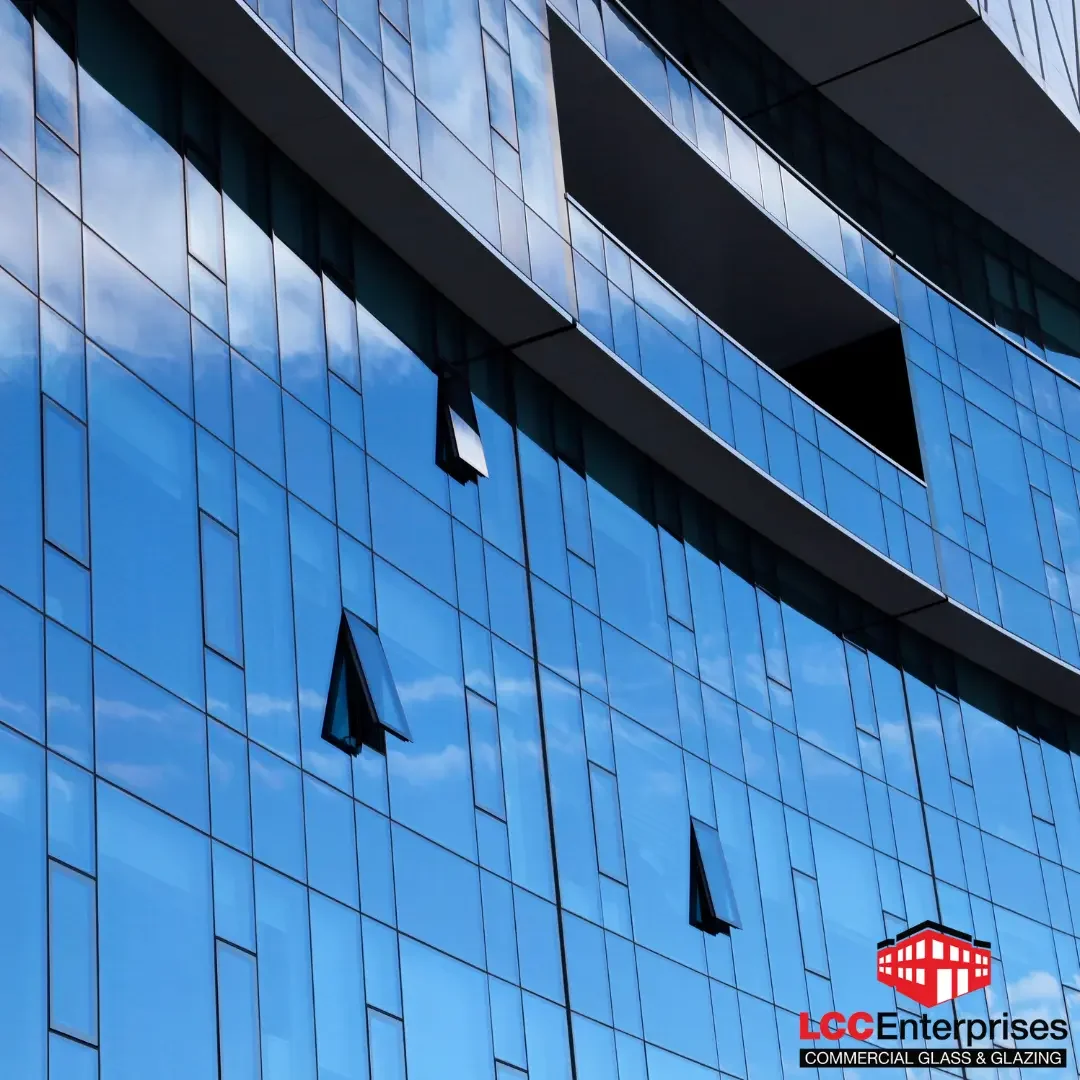
Commercial curtainwall glazing system requiring proactive envelope assessment, Harrisonburg VA
The Building Envelope Begins With Glass
Property managers overseeing commercial assets in Harrisonburg and across the Shenandoah Valley manage the building envelope's performance every time a tenant calls about a drafty storefront, a water infiltration stain appears on the ceiling tiles adjacent to a curtainwall bay, or the energy bill communicates that the glazing system the building has been depending on for thermal separation between the conditioned interior and the Shenandoah Valley's genuine four-season exterior is no longer performing at the level the building's operating budget assumed. Those calls and those bills are not random facility management events. They are the predictable consequences of building envelope glazing conditions that the commercial glazier's proper role in the building's life cycle specifically exists to prevent, identify, and address before those conditions advance to the tenant experience and the operating cost outcomes that inadequate glazing maintenance and inadequate glazier accountability produce.
The commercial glazier's role in building envelope performance extends across the full arc of the commercial property's glazing system life cycle in ways that property managers whose glazing vendor relationships are limited to emergency glass replacement have not fully developed. A capable commercial glazing contractor brings the system knowledge, the performance assessment capability, and the proactive maintenance discipline that building envelope performance requires from the storefront and curtainwall systems that commercial properties depend on for weather exclusion, energy performance, occupant comfort, and the professional appearance that commercial tenants and their customers evaluate continuously at every building entry and every glazed facade.
The Shenandoah Valley's climate creates the specific building envelope demands that Harrisonburg commercial properties manage through the full regional seasonal range. The genuine four-season character that the inland valley climate creates between the heating season's sustained cold events, the valley corridor's wind exposure conditions, and the warm, humid summer's biological growth activation on glazing system components all together create the glazing performance demands that the commercial properties across the service area depend on capable glazing contractors to address proactively rather than reactively. Understanding what property managers should expect from their commercial glazing relationship, how to evaluate glazing contractor performance against the accountability standards that building envelope stewardship requires, and what proactive glazing maintenance looks like in the Shenandoah Valley commercial property context gives Harrisonburg area property managers the framework for glazing vendor relationships that building performance and tenant satisfaction both depend on.
What Building Envelope Performance Actually Means for Commercial Glazing
Weather exclusion is the most fundamental building envelope performance function that commercial glazing systems provide, and the property manager whose building is experiencing water infiltration at storefront perimeter conditions, at curtainwall sill conditions, or at the entrance door threshold positions that the building's public-facing facades present to the Shenandoah Valley's genuine precipitation events is experiencing building envelope glazing failure that the commercial glazier's maintenance and assessment role specifically exists to prevent through proactive system evaluation.
The Shenandoah Valley's precipitation character creates the specific weather exclusion demands that Harrisonburg commercial glazing systems must satisfy through the frontal systems that the valley's topographic corridor channels, the convective summer storms that the regional warm season delivers, and the ice and freeze events that the valley's genuine four-season climate creates as the weather exposure conditions that glazing system perimeter sealants, drainage pathways, and structural connections all manage continuously. A glazing contractor whose relationship with a commercial property is limited to responding when tenants report water entry is providing reactive maintenance after building envelope failure rather than the proactive system assessment that prevents those failures before they reach the tenant's experience.
Thermal performance of the commercial glazing system affects the property's energy operating costs directly through the thermal separation that the glazing assembly provides between the conditioned interior and the exterior environment that the Shenandoah Valley's seasonal temperature range creates at the building facade. A curtainwall or storefront system whose thermal performance has deteriorated through failed insulating glass units, compromised thermal break conditions, or the perimeter sealant failures that allow infiltration pathways into the building envelope creates the energy penalty that the building's utility bills communicate and that the tenant's comfort complaints confirm as the interior environmental quality consequence of building envelope glazing conditions that the property manager's glazing vendor relationship should be identifying and addressing proactively.
Structural integrity of the glazing system's anchoring, framing connections, and the glass retention conditions that the system depends on for the occupant safety and the weather exclusion function those structural components provide warrants the periodic professional assessment that the Shenandoah Valley's thermal cycling and the wind load conditions the valley corridor creates in commercial building facades advances between the maintenance intervals that proactive glazing assessment specifically addresses before structural deterioration reaches the safety concern that reactive discovery communicates.
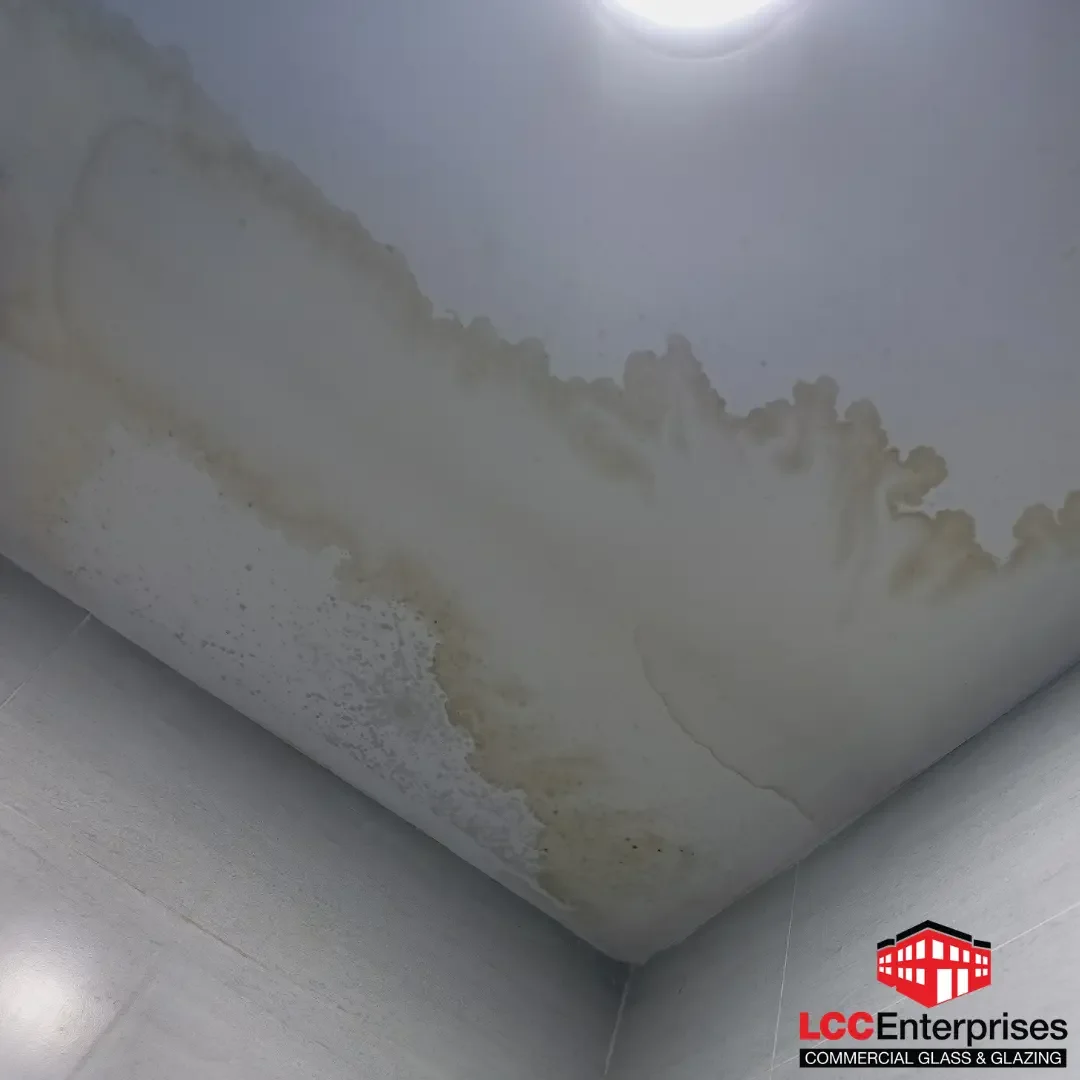
Water infiltration damage on a commercial ceiling resulting from failed glazing system perimeter sealant, Shenandoah Valley
What Property Managers Should Expect From Annual Glazing Assessment
Annual glazing system condition assessment is the proactive service that property managers of Harrisonburg commercial assets should expect their glazing contractor to provide as a standard component of the building envelope maintenance relationship rather than the extraordinary service that emergency conditions motivate. The annual assessment that a capable commercial glazier provides evaluates the perimeter sealant conditions at storefront and curtainwall perimeters, the insulating glass unit seal integrity that thermal performance depends on, the drainage pathway clearance that weather exclusion requires at sill conditions, and the structural connection conditions that the anchoring integrity assessment provides for the safety and performance function those connections serve.
The Shenandoah Valley seasonal timing for annual glazing assessment warrants the fall assessment that confirms the system's readiness for the heating season's cold events and the freeze conditions the valley climate delivers, and the spring assessment that evaluates the conditions the heating season's thermal cycling advanced in perimeter sealants, drainage conditions, and the hardware positions that the genuine cold events the regional winter creates affected between assessment intervals.
Assessment documentation that the capable commercial glazier provides following annual condition evaluation gives the property manager the written condition record that deferred maintenance justification, capital planning, and the tenant communication that significant glazing conditions create all depend on for the professional facility management that commercial property stewardship requires.
Perimeter Sealant: The Most Consequential Glazing Maintenance Item
Perimeter sealant at the interface between commercial glazing systems and the adjacent building structure represents the single most consequential glazing maintenance item that Harrisonburg commercial property managers should expect their glazing contractor to evaluate, report on, and address on the proactive maintenance schedule that building envelope weather exclusion specifically requires. The sealant that weatherproofs the storefront system's connection to the building structure at head, sill, and jamb conditions and the curtainwall system's perimeter conditions at the floor plate interfaces is the building envelope's last line of defense against the water infiltration that the Shenandoah Valley's precipitation events deliver to commercial facades continuously through the property's operating life.
Sealant service life in the Shenandoah Valley's climate reflects the thermal cycling that the inland valley's genuine four-season temperature range advances in sealant adhesion and material integrity between the replacement intervals that the regional climate creates as the maintenance frequency that building envelope performance requires. The sustained cold events and the freeze conditions that the valley climate delivers through the heating season, combined with the warm, humid summer's UV exposure and the biological growth conditions the regional warm season activates on exterior sealant surfaces, advance the adhesion failure and the material degradation that perimeter sealant replacement addresses before water infiltration reaches the interior building assembly positions that failed sealant allows moisture access to.
Property managers should expect their commercial glazier to provide the specific sealant condition assessment that identifies the adhesion failure locations, the joint condition deterioration, and the biological growth establishment on sealant surfaces that annual assessment reveals as the maintenance items that proactive replacement addresses while they are maintenance-scale repairs rather than the remediation-scale conditions that deferred sealant replacement creates when water infiltration has been advancing through failed sealant positions for the seasons between discovery and correction.
Insulating Glass Unit Performance and Assessment
Insulating glass unit seal failure creates the thermal performance deterioration and the visual fogging that property managers and tenants observe as the most visible glazing system condition that building envelope performance assessment identifies as a capital planning item in the commercial glazing system's life cycle. The IG unit's edge seal that maintains the inert gas fill and the interior surface conditions that thermal performance and visual clarity both depend on advances toward seal failure through the thermal cycling that the Shenandoah Valley's temperature range creates in the differential expansion and contraction between the glass lites and the spacer seal that the edge seal must accommodate continuously across the unit's service life.
Energy performance implications of failed IG units in Harrisonburg commercial properties reflect the thermal separation loss that the unit's inert gas fill depletion and the interior surface condensation that moisture infiltration creates in the glazing assembly's thermal performance. A commercial property whose glazing system includes a meaningful number of failed IG units is paying the energy penalty that the glazing assembly's thermal performance deterioration creates against the building's HVAC operating costs, and the capital investment that IG unit replacement represents recovers against that operating cost through the thermal performance restoration that new units deliver.
Property managers should expect their commercial glazier to identify failed IG units during annual assessment, document their locations and quantity, and provide the capital replacement planning that the unit replacement scope warrants for the property's deferred maintenance budget and the capital plan that significant glazing system component replacement requires for the professional facility management that commercial asset stewardship demands.
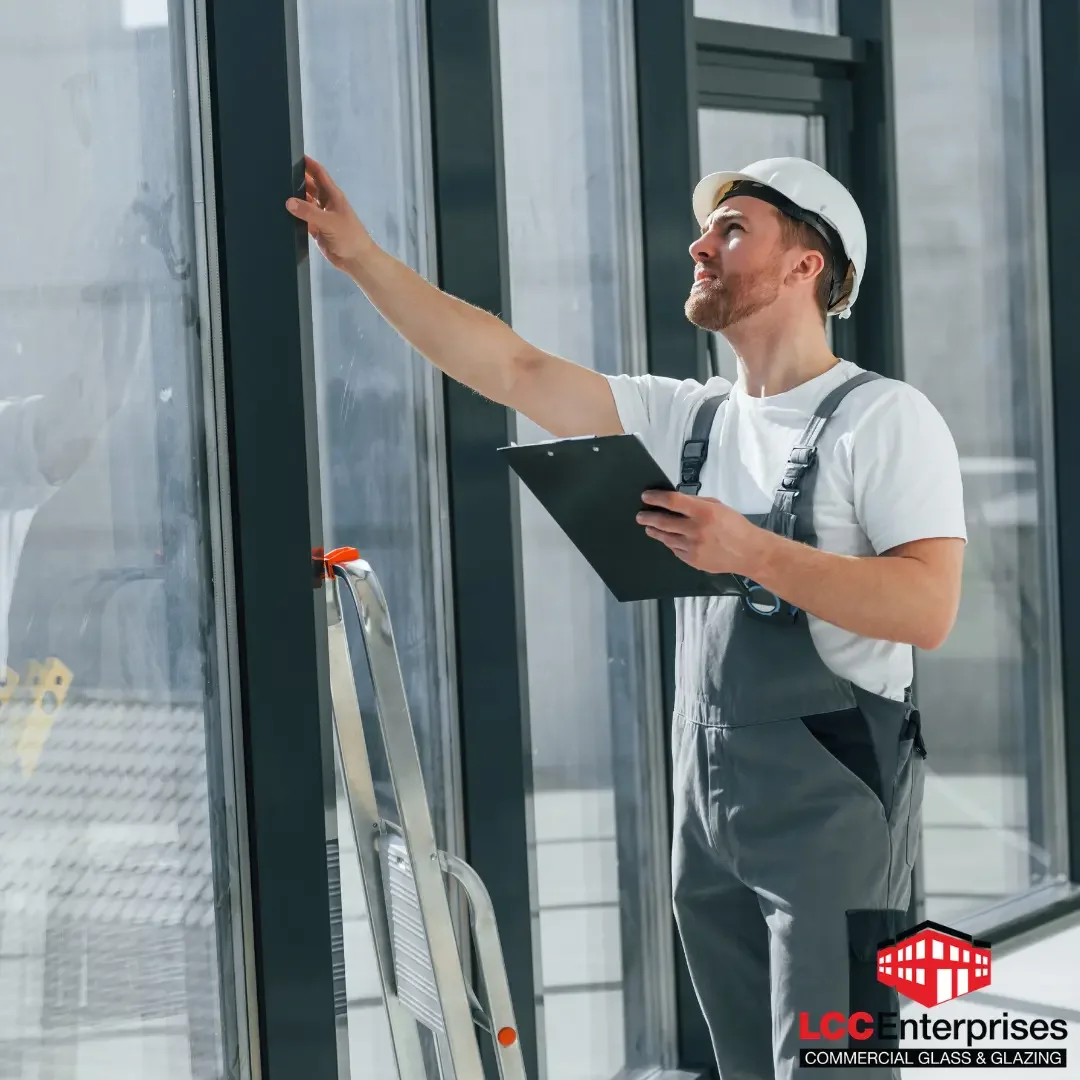
Glazing technician conducting annual building envelope assessment on commercial glass panels, Harrisonburg VA
Hardware and Operational Components
Entrance door hardware assessment at the commercial building entries that the glazing system incorporates as the public-facing access points that tenant and customer traffic concentrates through daily warrants the operational confirmation that door closer function, lockset operation, threshold seal condition, and the access control interface conditions all require to confirm that the entrance system is providing both the operational function and the security performance that commercial tenants and their customers evaluate continuously at every building entry.
The Shenandoah Valley's thermal cycling advances the hydraulic seal deterioration in door closer mechanisms, the threshold seal compression that the heating season's cold events create at entrance door thresholds, and the hardware finish conditions that the valley corridor's genuine seasonal range creates in exposed entrance hardware between the maintenance intervals that annual assessment identifies as the replacement and adjustment items that proactive hardware maintenance addresses before operational failure creates the tenant experience and the security concern that deferred hardware maintenance eventually produces.
Property managers should expect their commercial glazier to include entrance door hardware operational assessment as a standard component of the annual glazing system evaluation, providing the hardware condition documentation and the maintenance or replacement recommendations that commercial entrance performance requires for the professional facility management that tenant satisfaction and property operating standards both demand.
What Accountability Looks Like in a Commercial Glazing Relationship
Documentation standards that property managers should require from their commercial glazing contractor include the written condition assessment report following annual evaluation, the photographic documentation of identified conditions that the deferred maintenance record and the capital planning process both require, and the repair scope documentation that confirms what work was performed, what materials were used, and what warranty coverage the completed repairs carry for the property manager's facility management records.
Response time commitments for emergency glazing conditions at Harrisonburg commercial properties warrant the specific response standard that commercial facility operations require when a storefront glass failure, an entrance door operational failure, or a significant water infiltration event creates the immediate building security or weather exclusion concern that emergency glazing response specifically addresses. A commercial glazing contractor whose emergency response capability and response time commitments are confirmed before the emergency event creates the conditions that reactive discovery of those commitments communicates at the worst possible moment.
Warranty documentation for glazing system components, installation workmanship, and the perimeter sealant applications that the commercial glazier performs warrants the specific written warranty terms that the property manager's facility management records should contain for every significant glazing system work scope completed at the property.
Frequently Asked Questions
How often should a Harrisonburg commercial property have its glazing system professionally assessed? Annual assessment provides the appropriate frequency for most Harrisonburg commercial properties, with the fall timing that confirms heating season readiness and the spring timing that evaluates heating season conditions both warranting the professional evaluation that a capable commercial glazier provides as the proactive maintenance relationship that building envelope performance requires. Properties with older glazing systems, significant glazing coverage, or previous water infiltration history warrant the semi-annual assessment frequency that the condition history and the building envelope risk those factors create specifically motivate.
What should a property manager do when a tenant reports water infiltration near a glazed facade? Document the infiltration location with photographs immediately, note the weather conditions at the time of the report and in the preceding precipitation events, contact the commercial glazier for the emergency assessment that identifies the infiltration source before additional precipitation events advance the interior damage the infiltration has already initiated, and confirm whether the condition represents a glazing system maintenance item or a building envelope condition outside the glazing scope that the adjacent trade responsible for that building envelope component must address. LCC Enterprises provides the professional assessment that distinguishes glazing system infiltration sources from adjacent building envelope conditions at Harrisonburg commercial properties throughout the Shenandoah Valley service area.
How does the Shenandoah Valley's climate specifically affect commercial glazing system service life? The inland valley's genuine four-season temperature range creates the thermal cycling that advances perimeter sealant adhesion failure, IG unit edge seal deterioration, and door hardware component wear at rates that the more moderate coastal Virginia climate does not produce between comparable maintenance intervals. The valley corridor's wind exposure conditions create the driving rain and the structural loads that the glazing system's weather exclusion and structural integrity must manage continuously, and the warm, humid summer's biological growth conditions advance organic establishment on sealant surfaces and drainage components that the regional warm season's ambient temperatures sustain between professional cleaning and assessment intervals.
What is the difference between a reactive and a proactive glazing maintenance relationship for commercial properties? A reactive glazing maintenance relationship engages the commercial glazier when tenants report conditions or when visible failure creates the emergency response that conditions have advanced to before the glazier's involvement. A proactive glazing maintenance relationship engages the commercial glazier on the annual assessment schedule that identifies developing conditions before they reach the tenant experience, documents the system's condition for capital planning, and addresses the maintenance items that early intervention resolves at maintenance cost rather than the remediation cost that deferred discovery creates. The property manager whose glazing relationship is proactive rather than reactive is managing the building envelope's glazing conditions rather than responding to the outcomes that unmanaged conditions eventually produce.
Why should Harrisonburg property managers choose LCC Enterprises as their commercial glazing maintenance partner? LCC Enterprises brings the Shenandoah Valley commercial glazing expertise, the Harrisonburg regional market knowledge, and the building envelope performance accountability that property managers overseeing commercial assets in the regional market specifically benefit from when the glazing contractor relationship extends across the full building envelope maintenance arc from proactive annual assessment through emergency response and capital replacement planning. The documentation discipline, the assessment completeness, and the regional climate awareness that LCC Enterprises brings to commercial property glazing relationships in Harrisonburg and throughout the Shenandoah Valley provides the professional facility management support that commercial asset performance and tenant satisfaction both depend on from the glazing system that every commercial building's envelope incorporates as its most visible and most performance-critical component.
Commercial Glazing Performance That Property Managers Can Account For
The commercial glazier's role in building envelope performance at Harrisonburg commercial properties encompasses the annual assessment discipline, the perimeter sealant maintenance that weather exclusion depends on, the IG unit performance monitoring that thermal efficiency requires, the entrance hardware operational confirmation that tenant and customer experience evaluates daily, and the emergency response capability that unexpected glazing conditions demand from the contractor relationship whose accountability the property manager has established before those conditions create the moment that tests it. Property managers whose commercial glazing relationship with LCC Enterprises reflects that full accountability standard are managing the building envelope's most visible and most consequential performance component with the professional discipline that commercial asset stewardship in the Shenandoah Valley specifically requires.
Phone: 540-214-3773 Website:https://lccenterprises.co/
Serving property managers and commercial property owners throughout Harrisonburg and the Shenandoah Valley with dependable curtainwall and storefront glazing expertise.

Commercial storefront glazing representing the weather exclusion and tenant experience that building envelope performance protects, Shenandoah Valley
